Keys and phone calls run the whole place
Picture a small village club with a couple of clay courts. The chairman has the gate key, a spare hangs at the treasurer's, and a third circulates among the coaches. If someone wants to play at six on a Wednesday morning, they have to call somebody the day before, arrange the key handover, and return it in the evening. Half the people give up during that phone call.
The other half show up, play, and pay — sometimes. Cash into the box, occasionally nothing, because “it was only a couple of hours.” The manager has no clear picture of who played when or whether they paid, and is forever chasing down which key is where. This is the everyday reality of smaller facilities, and it's exactly what self-service keypad access solves.
And every so often two of them turn up for the same hour — one arranged it over the phone, the other pencilled it into a notebook, and both are certain the court is theirs. Instead of anyone hitting a ball, the manager ends up refereeing who plays now and who waits on the bench, smoothing over the friction the double booking leaves behind.
How keypad access works
The principle is simple and the player doesn't have to learn anything new. The whole process, from booking to entry, looks like this:
- The player opens the club's booking page, picks a court and a free time slot. They see exactly what's taken and what isn't.
- They pay by card online through Stripe or draw an hour from a season pass. The booking is confirmed instantly, with no waiting for an attendant.
- The system automatically generates an access code for exactly the booking window — with a lead time the club sets, for example 15 minutes before the start — and sends it by SMS and email. The SMS comes from the sender “TotoLabu”.
- The player enters the code on the lock's or key box's keypad and walks in. Once the booking ends, the code stops working and the next person to have the court gets their own.
The attendant never has to step in even once. In the Totolabu calendar they see every booking and payment, and they can also generate a code by hand — for a one-off rental by agreement, a work party, or a tournament. If that worries you, even a club without its own IT person can get the whole online booking system up and running.
TK Šamorín: a smart key box
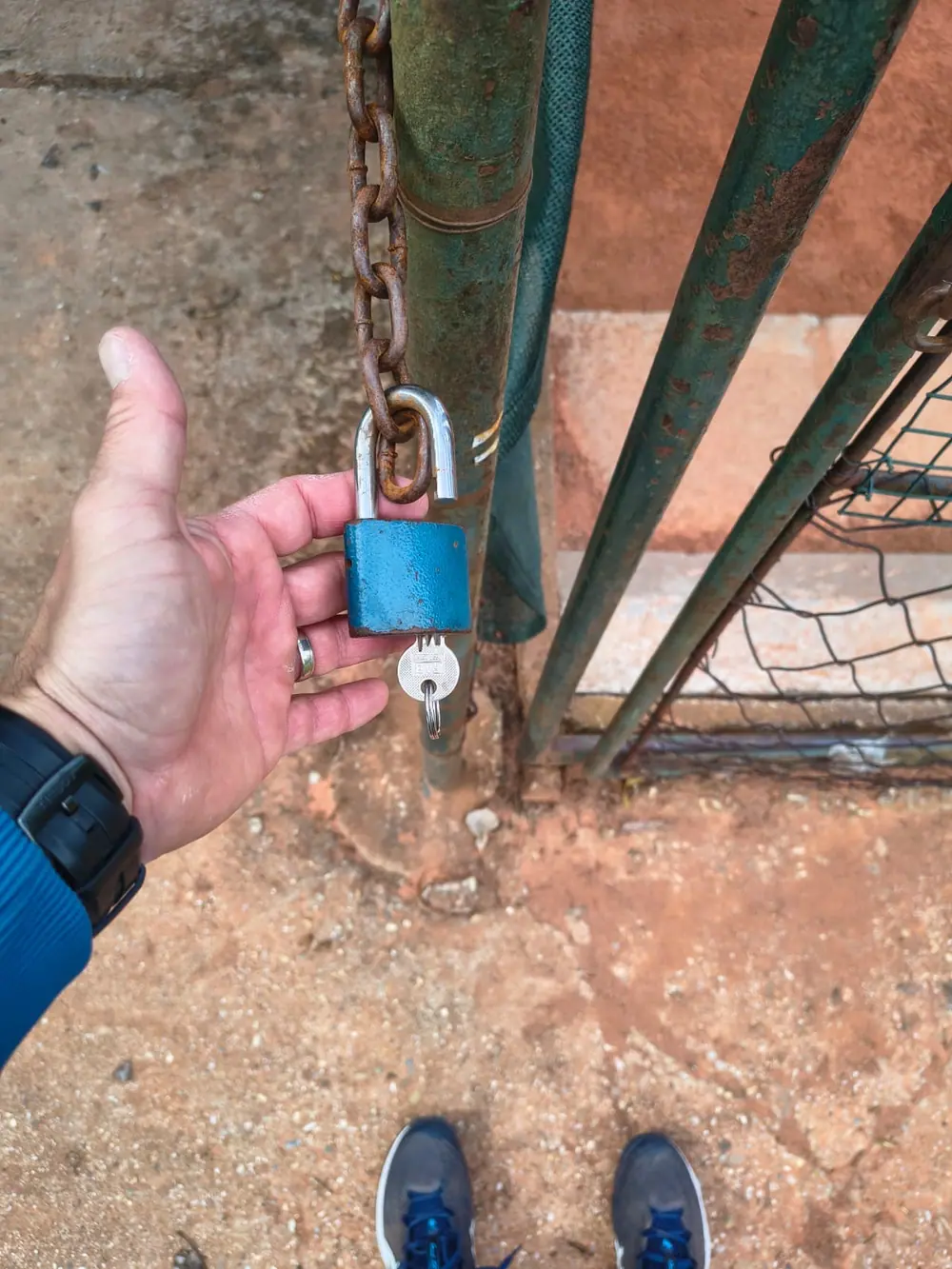
TK ŠTK Šamorín is a club with roots going back to 1914 and five clay courts. Bookings and payments now run online through Totolabu, and they solved entry the cheapest way possible — with a smart key box. The gate stayed exactly as it was, on an ordinary padlock. The only thing added is a black box on a green post.
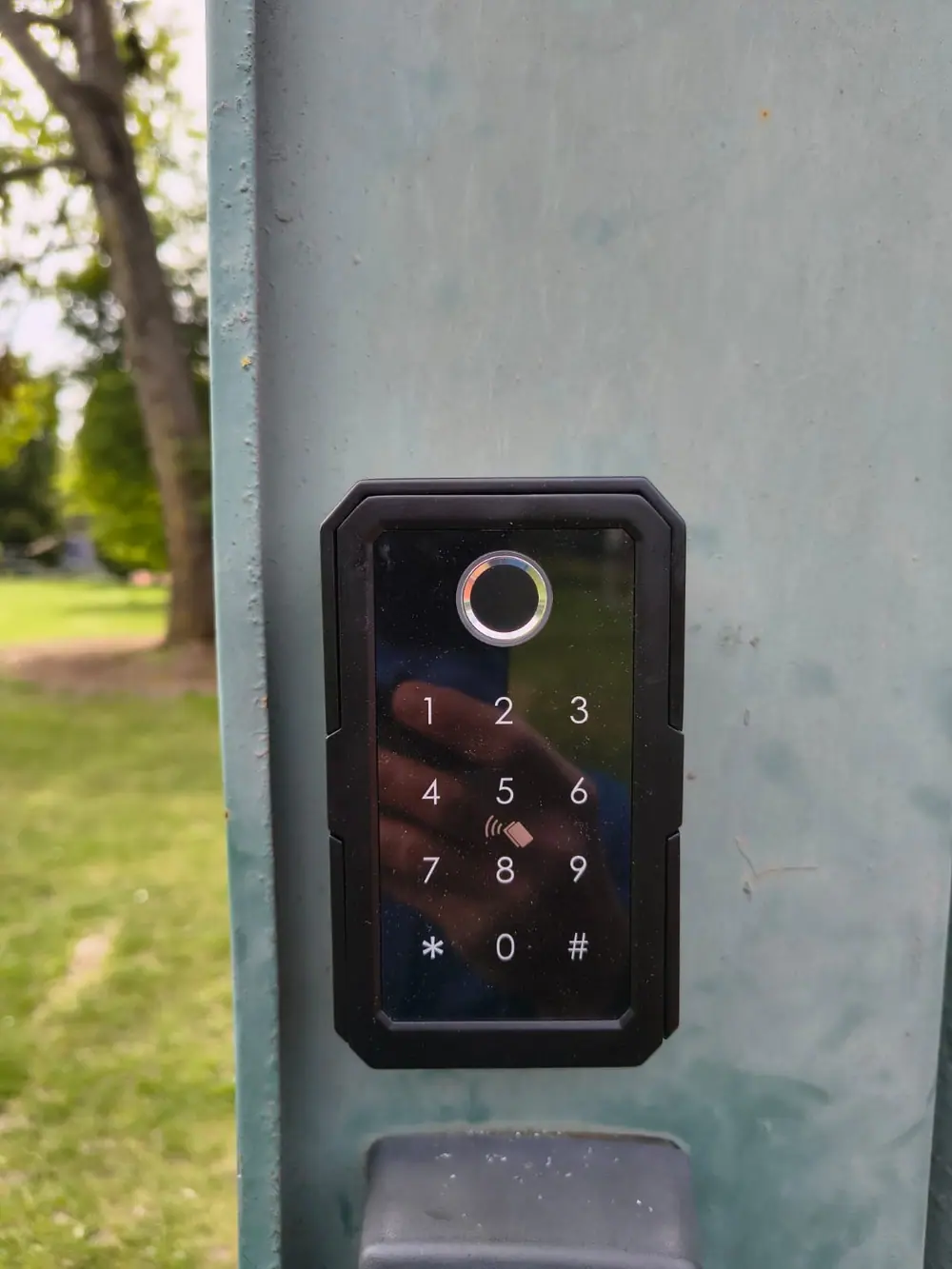
How does it work in practice? Before the hour starts, the player gets an SMS with a numeric code. At the gate, on the green post, they find a black box with a touch keypad — tap it and it lights up: digits 0 to 9, a star and a hash. Then they can start entering the code.
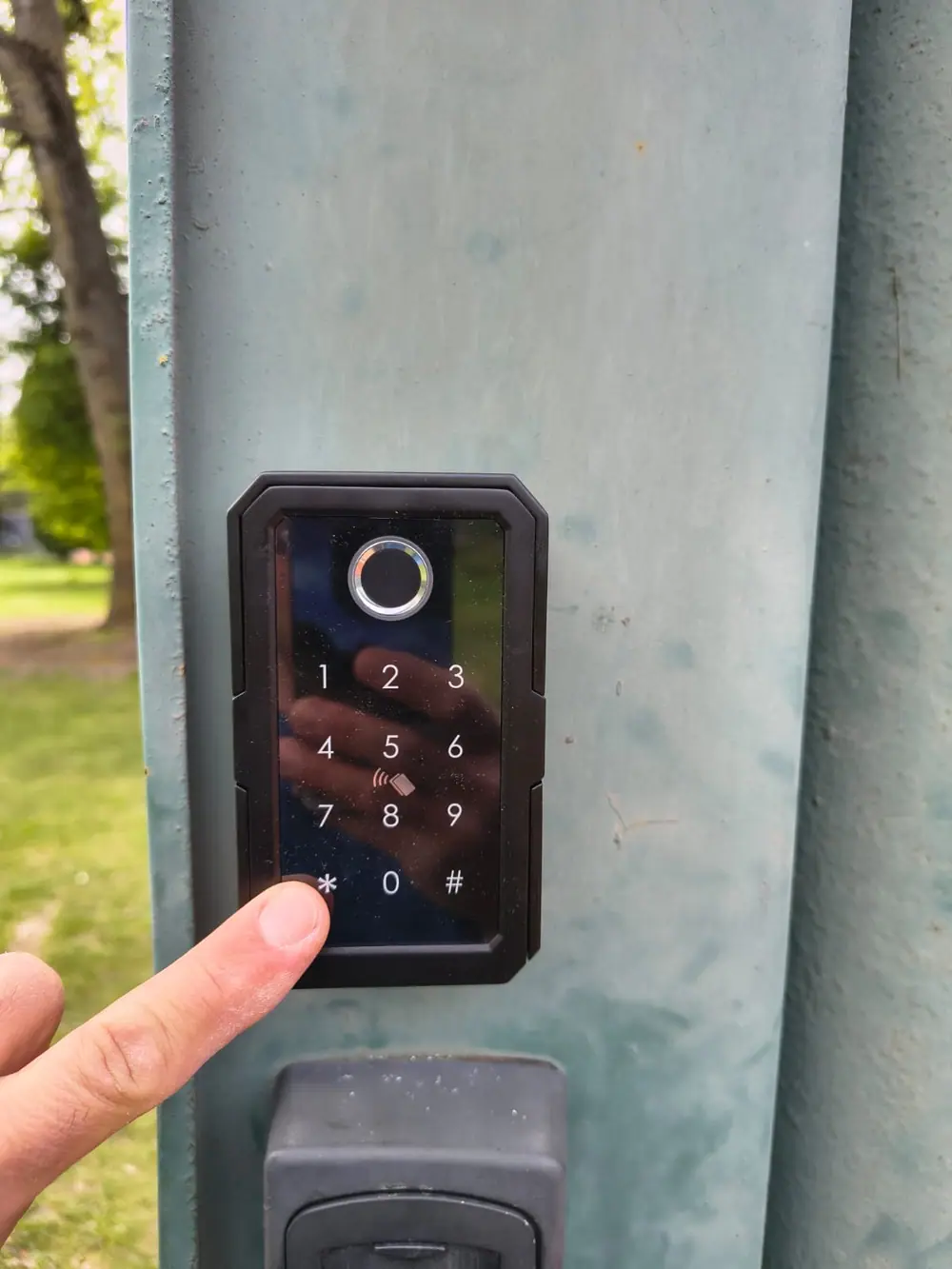
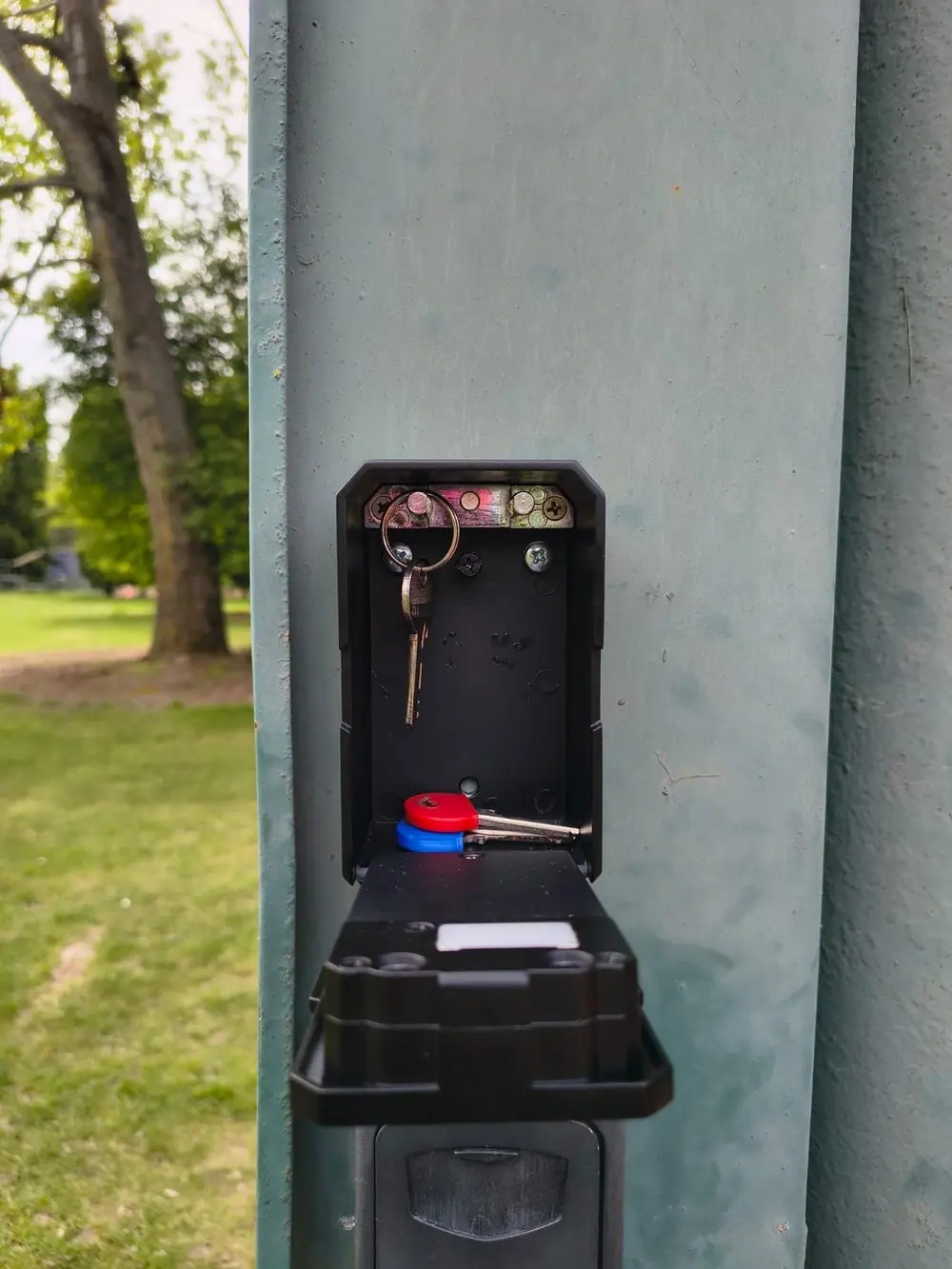
- The player enters the code from the SMS and confirms with the hash (#). A motor releases the lower cover of the box.
- Inside are the keys — a key on a ring for the gate padlock, plus a blue and a red key for the toilets.
- They unlock the padlock on the chain, walk in, and go play.
- After the game they lock the gate, return the key to the box, and close the cover. It locks itself. The code is only valid during their booking, so the next player can use the box after them with their own code, no problem.
The whole point is the price and the simplicity of it. The club didn't have to replace the gate or buy expensive electronic locks with a power supply. The only smart part is the key box — off-the-shelf hardware from Slovak online stores that screws onto a post and is up and running in a few minutes. It's the most affordable way into self-service operation.
Since we switched to Totolabu, players book and pay for the court online and get a code to get in — we ditched physical keys and locks entirely. The courts are noticeably busier and I finally have an overview without constant phone calls.
Hodruša-Hámre: a smart lever handle lock on the gate
A bit further away, in the quiet of the Štiavnica Hills, they went for something slightly pricier but even more convenient. Tenisové kurty Hodruša-Hámre is managed by the municipal sports club OŠK Hodruša-Hámre — exactly the kind of operation where no attendant is stationed on site. Four clay courts, open daily from seven in the morning to nine in the evening, rental from 7 euros an hour.
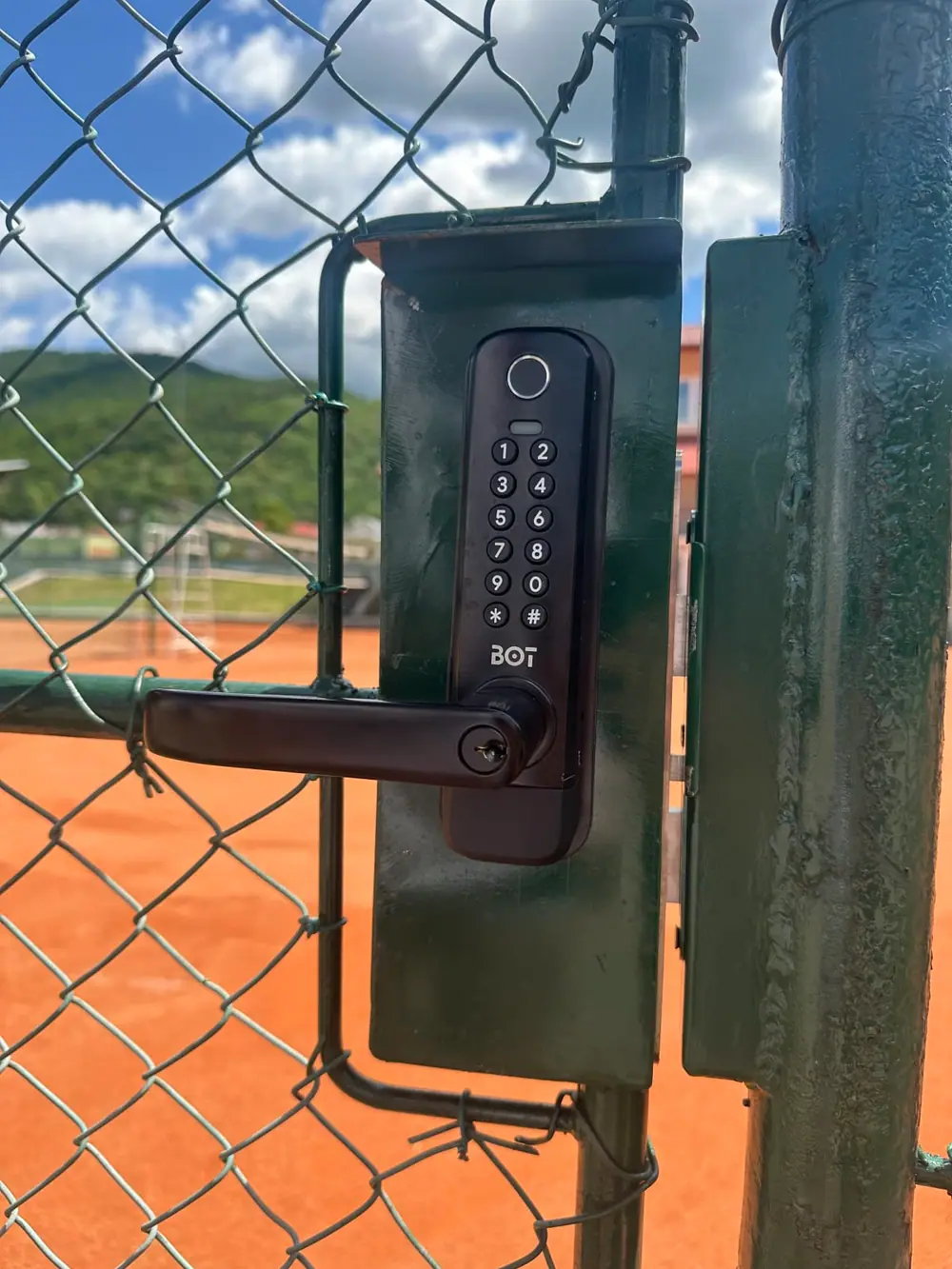
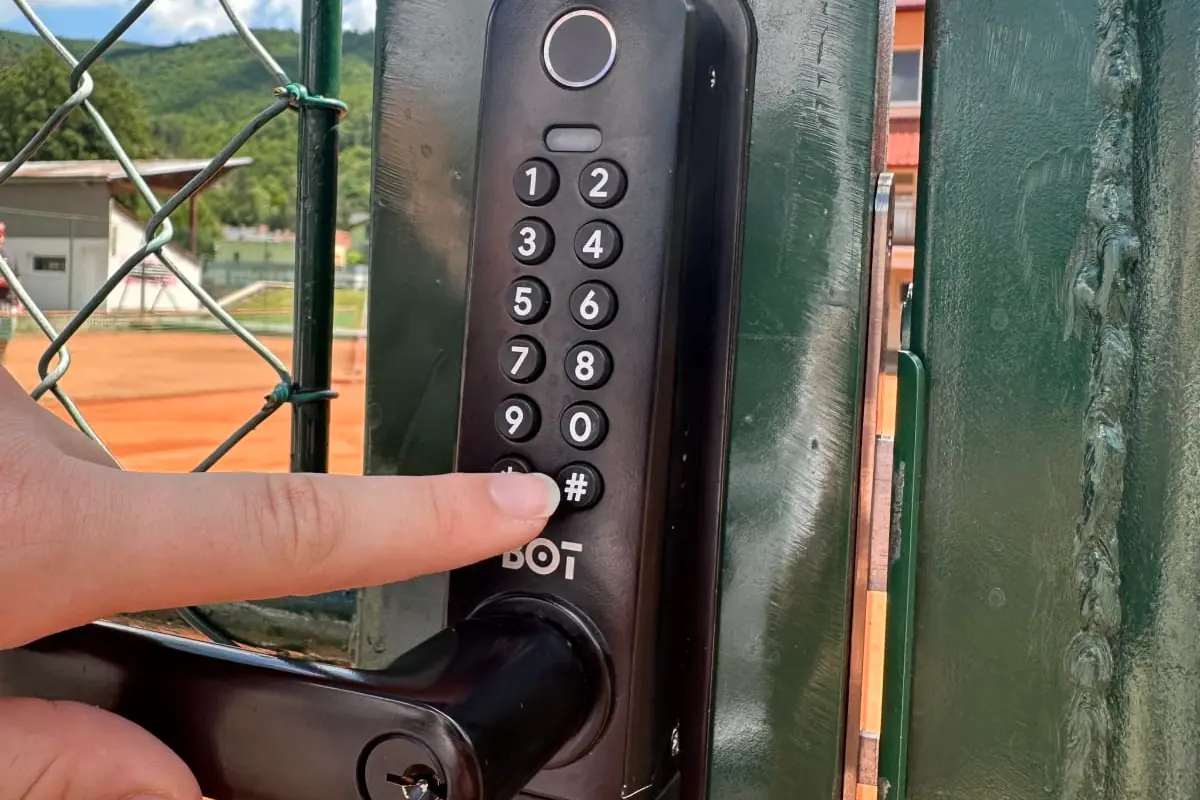
Here there's no box and no keys. Smart lever handle locks with a keypad — the photos show the BOT brand — are mounted right on the green gates in the courts' fence. The code from the SMS goes straight into the handle.
The process is self-service from start to finish. After booking, an SMS with the code arrives at the phone number provided, and the code becomes valid 15 minutes before the start. The player enters it on the handle's keypad, presses the hash (#), a green light comes on and the handle opens. If they mistype, they press the star (*) and enter the code again. As the club puts it on their own website: “Entry to the courts is self-service — you unlock the handle with the code from the SMS.”
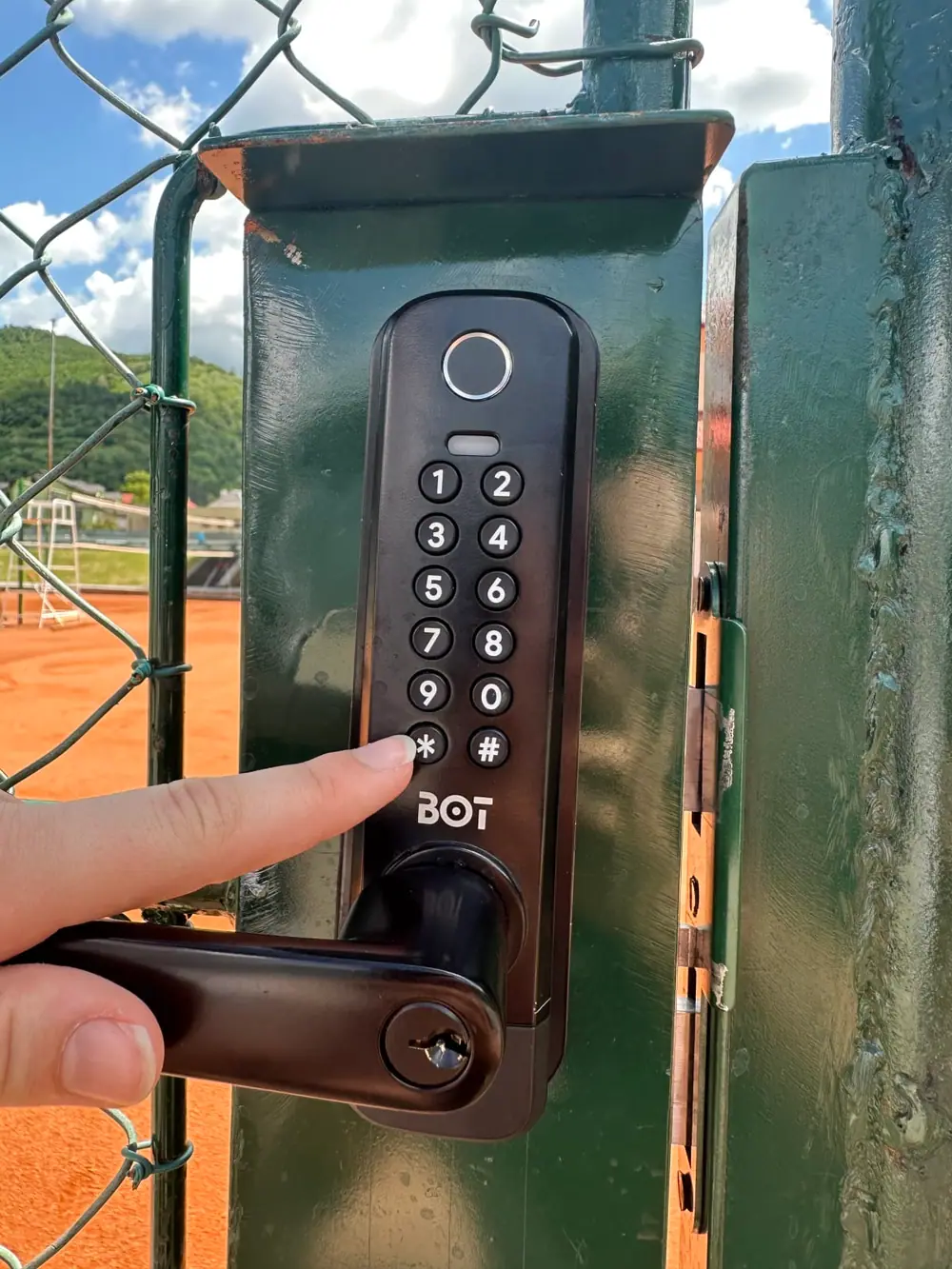
The only difference from Šamorín is the hardware on the gate. The handle lock costs more than the key box, but it does away with handling physical keys — the player unlocks and returns nothing. The booking and payment system is the same in both cases.
Why the lock needs no internet
This is the question that comes up at every other club: “What if there's no signal at our courts? Do we need Wi-Fi there?” You don't. And it's probably the most important thing about the whole solution, so let's break it down.
Both clubs run on TTLock-platform locks. The code Totolabu generates isn't verified against any server — it's verified right inside the lock. The lock has its own clock and a shared algorithm, so it can work out for itself whether a code is valid for a given time. It's a similar principle to the one-time code generators you know from online banking.
That has a few practical consequences. The facility needs no Wi-Fi, no SIM card and no power supply — the locks run on ordinary AA batteries, and one set lasts months depending on how often people play. The manager sees the battery level in the TTLock app when they get close to the lock over Bluetooth. The lock is paired once with the app and with Totolabu, and after that the codes go out automatically with every booking.
The most common question from clubs is whether they need internet at the courts. They don't — the code is verified right inside the lock. That's exactly why we built the integration on TTLock locks: they work offline, on batteries, and you can buy them in ordinary online stores.
What it does for your operation
When entry is controlled by a code rather than a person with a key, several things change at once. Hours that couldn't be served before now sell — early mornings, late evenings, weekends, and spur-of-the-moment “in an hour” bookings. Without a single phone call.
What's more, a code only goes out with a paid booking, so non-payers, off-the-books hours and chasing cash are over. The manager has an overview in a single calendar of who played when and whether they paid — and because a paid slot lives there exactly once, it can't be sold a second time, so double bookings and the friction over who's meant to be on court simply stop happening. And because the whole tennis court booking system runs itself, the time saved can go into the club instead of admin.
What you need to get started
Getting into self-service operation isn't a big investment. To start, you need three things:
- A smart lock or key box that supports TTLock. A smart key box runs to roughly 109 to 112 euros — for example, the BOT KB1 with TTLock costs 111.28 euros at a Slovak online store. A BOT smart lever handle lock with a keypad, mounted straight onto the gate, costs more, roughly 222 to 233 euros.
- An account in the Totolabu booking system, which handles the booking, the card payment and the automatic code generation.
- A phone with the TTLock app for a one-off pairing of the lock. You'll manage the pairing once during installation and never have to come back to it.
No cabling, no electrician, no monthly internet fee at the facility. Both the box and the handle are off-the-shelf hardware — you buy them at an online store and mount them yourself.
It doesn't only work for tennis
Tennis is just the clearest example. The same logic — book, pay, code, enter — fits any operation that people rent by the hour and where no staff need to stand at the door:
- multi-purpose and outdoor workout courts run by towns and villages
- saunas, wellness rooms and smaller gyms with no reception
- coworking rooms and meeting rooms by the hour
- sports equipment rental points and clubhouses
The same rule applies everywhere: whoever pays gets in, and the owner doesn't have to be there for it.
Want to rent out your courts without keys and phone calls? We'll show you how to get bookings, payments and keypad access running at your place too — from choosing the lock to your first sold evening slot. Write to us and we'll launch it together.
Try for free